
- Home
- Service & Repair
- Spring Replacement
Broken spring repair
Garage Door Spring Replacement in Pewaukee, WI
Springs do the heavy lifting on your garage door, not the opener. When one breaks, the door suddenly feels like it weighs several hundred pounds and the opener cannot safely move it. We replace torsion and extension springs for homes across Pewaukee and Lake Country, sizing each spring to the actual weight of your door, then balancing and testing the door so it lifts smoothly. Spring work is dangerous, and it is never a DIY job.
- Same-day service
- Price before we start
- Safety-tested
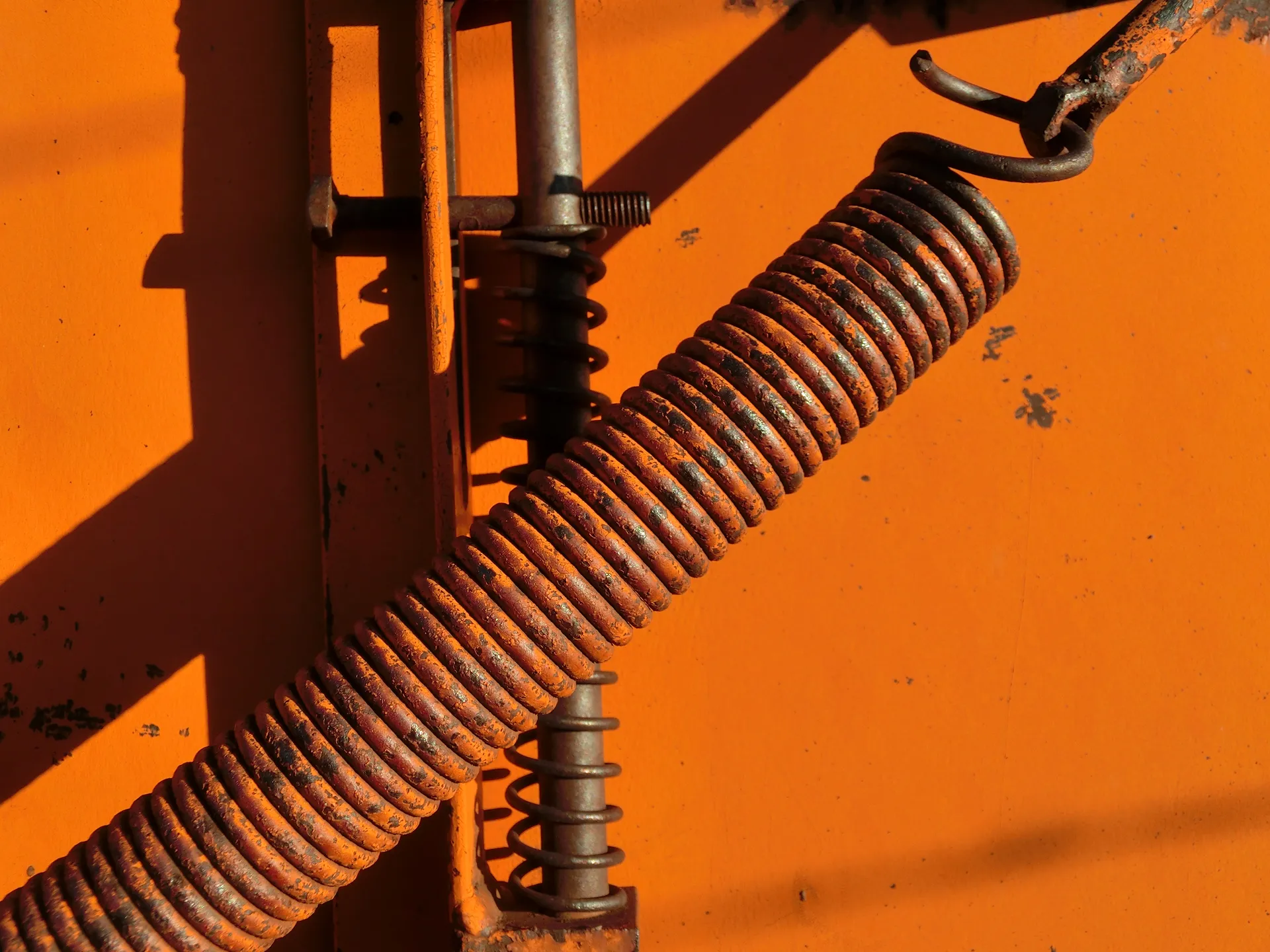
What springs do
The spring carries the door, the opener only guides it
A typical two-car steel door can weigh well over a hundred pounds, and insulated, wood or oversized doors weigh much more. The springs are set to counter almost all of that weight, so the door feels light enough to lift by hand and the opener only has to push or pull a small amount. When the springs are working, a door that has been disconnected from the opener should stay roughly in place when you let go of it halfway up. That balance is what protects the opener, the cables and the rest of the hardware.
When a spring breaks, that balance is gone in an instant. The cables go slack or the door drops, and the opener is suddenly asked to lift the full weight of the door. Some openers will strain and lift it partway, which is the worst outcome, since the rail, trolley and gears are not built for that load and the door can come down hard. Many newer openers will sense the extra force and stop. Either way, the door should not be used until the spring is replaced. Leave it in place, unplug the opener if you can do it safely, and keep the area under the door clear.
Springs are also the most dangerous part of a garage door to work on. A wound torsion spring or stretched extension spring stores a large amount of energy, and releasing it the wrong way can throw a winding bar, snap a cable or spin the shaft with enough force to break bones. Trained technicians use proper winding bars, clamps and procedures for a reason. Please do not try to adjust, unwind or replace springs yourself, even with an online video in hand. The tools look simple, but the margin for error is very small, and the injuries from a slipped winding bar are severe.
- Torsion springs on a shaft above the door
- Extension springs along the horizontal tracks
- Sized by wire gauge, diameter and length
- Wound left or right for each side
- Standard and high-cycle spring options
- Safety cables added to extension systems
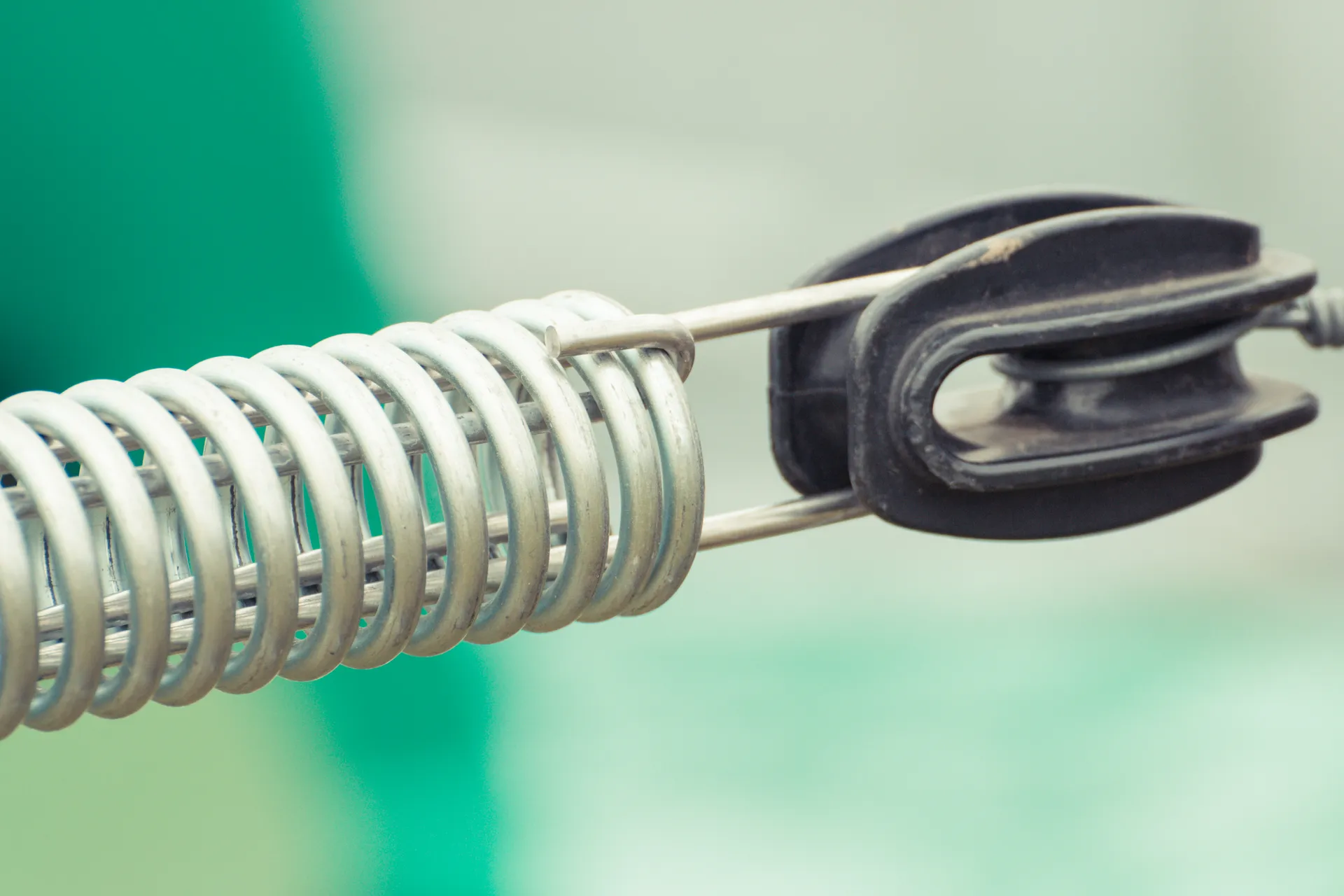
Torsion vs extension
Two spring systems, two ways of failing
Torsion springs are the large coiled springs mounted on a steel shaft just above the door opening. They are wound a set number of turns, and as the door closes they twist tighter, storing energy that helps lift it again. The shaft turns cable drums at each end, which wind the lift cables evenly. Most newer homes in the Pewaukee area have torsion systems, often with two springs on doors wider than a single-car opening. Torsion springs tend to give a smoother, more controlled lift and are easier to balance precisely.
Extension springs are the long springs that run parallel to the horizontal tracks on each side of the ceiling. They stretch as the door closes and pull it up as they contract, using cables that run over pulleys called sheaves. You see them often on older homes, ranches and some cottages with limited headroom. When an extension spring breaks without a safety cable threaded through it, pieces can fly across the garage. If your door has extension springs and no safety cables, that is something we fix during any visit.
Both types fail mainly from metal fatigue. Every time the door opens and closes, the spring wire flexes, and after enough cycles a tiny crack forms and the spring snaps. Rust speeds that up by pitting the wire and adding friction between the coils. On a torsion system you will usually see a clear gap of a couple of inches somewhere in the spring. On an extension system, the spring may be visibly stretched out, unhooked, or hanging in two pieces with a sagging pulley. Either way, the door will feel far heavier and usually will not open with the opener.
Sizing and balance
The right spring for your door's weight
A spring is not just a spring. Each one is defined by its wire gauge, inside diameter, overall length and wind direction, and those numbers have to match the weight and height of your door. A spring that is too weak leaves the door heavy, so the opener strains every cycle. A spring that is too strong makes the door fly up and drift open on its own. Simply copying the old spring is not always right, since the door may have been fitted with the wrong size years ago or gained weight from insulation, glass or new hardware.
So we start by weighing the door, or calculating its weight from its size and construction, and checking its height and the drum size. From that, we choose a spring with the right lifting force and the right number of turns. On two-spring doors we replace both springs together in almost every case, because they have seen the same number of cycles and the remaining one is usually close to breaking. Matched springs also share the load evenly, which keeps the cables winding straight and the door level. If you only want the broken spring replaced, we will explain the trade-off and respect your choice.
After the springs are installed and wound, we fine-tune the balance. We disconnect the opener and lift the door by hand to check that it moves with moderate effort and stays put about halfway. We check that both cables are tight and wind evenly on the drums, and that the door sits level against the floor. Only then do we reconnect the opener, adjust its force and travel settings for the new balance, and test the photo eye sensors and auto-reverse. A properly balanced door is quieter, easier on the opener, and much safer if the power goes out and you need to lift it by hand.
- Door weight measured or calculated
- Wire gauge and diameter matched
- Correct turns for door height
- Both springs replaced as a pair
- Hand balance test at mid-travel
- Opener force reset after balancing

What to look for
Signs of a broken or worn spring
A gap in the spring
Look at the torsion spring above the door from a safe distance. A visible gap of a couple of inches between coils means it has snapped. The door should not be run with the opener until both springs have been checked and the broken one replaced.
Loud bang, nothing moved
A torsion spring that breaks often sounds like a firecracker or a heavy object falling in the garage. If you hear that and find nothing on the floor, look up at the springs. Many homeowners hear the spring break days before they discover the cause.
Door suddenly very heavy
If a door that used to lift easily by hand now feels like dead weight, a spring has broken or lost most of its tension. Do not try to lift it alone, and do not let the opener keep working against that extra weight, since that can damage the opener.
Door falls fast closing
A door that drops quickly in the last few feet, or slams into the floor, is not being held back by its springs. This is dangerous for anyone under the door and hard on the bottom section, cables and opener. Stop using it and have the springs checked.
Opener lifts a few inches
When the opener raises the door a few inches and then stops or reverses, it is often detecting the extra load from a broken spring. Many openers have a safety feature that limits force for exactly this reason. Pressing the button again will not fix it.
Slack or loose cables
Cables that hang loose or jump off the drums are often a side effect of a broken torsion spring, because the drums stop holding tension. On extension systems, a broken spring can drop a pulley. Never tighten or reattach cables yourself while springs are involved.
Our process
How we handle spring replacement
The same careful routine on every visit, so nothing gets missed.
- 1
Confirm the failure
We check which spring broke, inspect the other spring, and look at the cables, drums, bearings and shaft for damage caused by the failure. On extension systems we also check the pulleys and confirm whether safety cables are installed. Then we explain what we found in plain terms.
- 2
Size the new springs
We measure or calculate your door's weight and height and choose springs with the correct wire gauge, diameter, length and wind direction. If you want longer life, we explain the high-cycle option. You get the price before work starts, with no surprises later.
- 3
Install and wind safely
We secure the door, release any remaining tension using proper winding bars and clamps, and remove the old springs. The new springs are installed, wound to the correct number of turns, and the cables are set evenly so the door hangs level in the opening.
- 4
Balance and test
We disconnect the opener and check that the door lifts with moderate effort and holds at mid-travel. Then we lubricate the springs, reconnect the opener, adjust force and travel limits, and test the photo eye sensors and auto-reverse before we finish.
Cycle life
How long springs last, and how to get more
Springs are rated by cycles, where one cycle is the door opening and closing once. Many standard springs that come on new doors are rated around ten thousand cycles. That sounds like a lot, but a busy household that uses the garage as the main entry can easily run the door four or more times a day. At that rate, a standard spring can wear out in well under ten years, and sooner if the door is heavy, the spring was undersized, or the garage sees a lot of moisture.
High-cycle springs use longer or heavier wire to spread the stress over more coils, so each one flexes less on every cycle. They are a good choice for families who use the garage door constantly, for heavy insulated or wood doors, and for homeowners who simply do not want to repeat this repair any time soon. They cost more than standard springs and sometimes need a little more room on the shaft, so we check the space above your door and explain the trade-off before recommending them. For lighter doors that see modest use, a standard spring is often perfectly reasonable.
Whatever spring you choose, a few habits help it last. Keep the door balanced, since a door out of balance stresses the spring and the opener on every cycle. Have the springs lightly lubricated with a garage door lubricant during a yearly tune-up to slow rust and reduce coil friction. Watch for early signs like a door that feels heavier, closes faster than usual, or makes a squeal from the shaft area. Catching a tired spring before it snaps is far easier than a surprise failure. Never try to test a spring by pulling on it or tightening the set screws, as that tension is still dangerous.
What affects the price
Torsion or extension
Torsion and extension systems use different springs, hardware and installation steps. Some homeowners with older extension springs choose to convert to torsion for smoother operation, which adds parts and labor. We explain whether that change makes sense for your garage and headroom.
Spring size and count
Heavier doors need thicker wire and longer springs, and wide doors usually use two springs or more. Larger and higher-rated springs cost more than small ones, and replacing a matched pair costs more than one spring, though it often prevents a second visit soon after.
Standard or high-cycle
Standard springs suit doors that see light or moderate use. High-cycle springs cost more but are built for many more open and close cycles. For a busy household or a heavy door, the longer life often makes the higher-rated spring worth considering.
Related worn parts
A broken spring often reveals frayed cables, worn drums, a cracked center bearing plate or a rusted shaft. If those parts are no longer safe, they need replacing with the springs. We point them out and include them in the quote before work starts.

Local know-how
Spring life in Pewaukee's cold and lakeside air
Springs in Pewaukee garages work in conditions that are hard on steel. On subzero mornings, which most winters bring, spring wire is under the most stress, and we see a clear rise in broken springs during the first deep cold of the season and again in January and February. Homes near the shore of Pewaukee Lake also deal with damp air and wind off the water, which pushes moisture into unheated garages and rusts springs from the outside in. Many of the larger homes in the City of Pewaukee's newer subdivisions have heavy insulated two- and three-car doors that need properly sized springs, while older ranches and lake cottages around the Village often still run on extension springs, sometimes without safety cables. We size, install and balance springs for each of these, and we recommend a fall spring check before the cold sets in.
Spring Replacement FAQ
Questions about spring replacement
Answers from the technicians who do this work across Pewaukee every week.
Ask a technicianCan I replace a garage door spring myself?
We strongly advise against it. Torsion and extension springs store enough energy to cause serious injury if they slip or are released the wrong way, and the risk is real even for handy homeowners. Winding a torsion spring requires proper winding bars, clamps and a correct turn count for your door. A trained technician can do the job safely and balance the door correctly afterward.
Should both springs be replaced at once?
On doors with two springs, we recommend it in almost every case. Both springs were usually installed at the same time and have seen the same number of cycles, so the second one is often close to breaking. Replacing both keeps the lifting force even on each side, which helps the cables wind straight and the door stay level. We quote both options so you can choose.
How long do garage door springs last?
It depends on the spring's cycle rating, how often you use the door, and the conditions in your garage. Many standard springs are rated around ten thousand cycles, which can mean several years for a typical family, and less if the garage is the main entry. High-cycle springs last considerably longer. Rust, poor balance and the wrong spring size all shorten spring life.
Why do springs break more in winter?
Cold makes steel less forgiving, and a spring that has been close to the end of its cycle life often gives out on a very cold morning. Unheated garages in Wisconsin can sit well below freezing for weeks, and moisture from snowmelt and lake air adds rust. A spring that was already fatigued in fall is the one most likely to snap in January.
Can I use my door with one broken spring?
No. Even on a two-spring door, one broken spring leaves the door badly out of balance, and the opener ends up lifting far more weight than it was built to handle. That can damage the opener and put extra stress on the remaining spring and cables. If the door is stuck open or closed, call us rather than forcing it with the opener or by hand.
What are high-cycle springs?
High-cycle springs are made with heavier or longer wire so the stress of each cycle is spread over more metal. That gives them a much higher cycle rating than standard springs. They are a good option for households that use the garage door many times a day, or for heavy doors. They cost more and need room on the shaft, so we check fit first.

Broken spring? Let us replace it safely
Keep clear of the door and call us. We will size the new springs to your door's weight, install and balance them safely, test the opener and sensors, and quote the price before work starts.
More services
Other ways we help Pewaukee homeowners
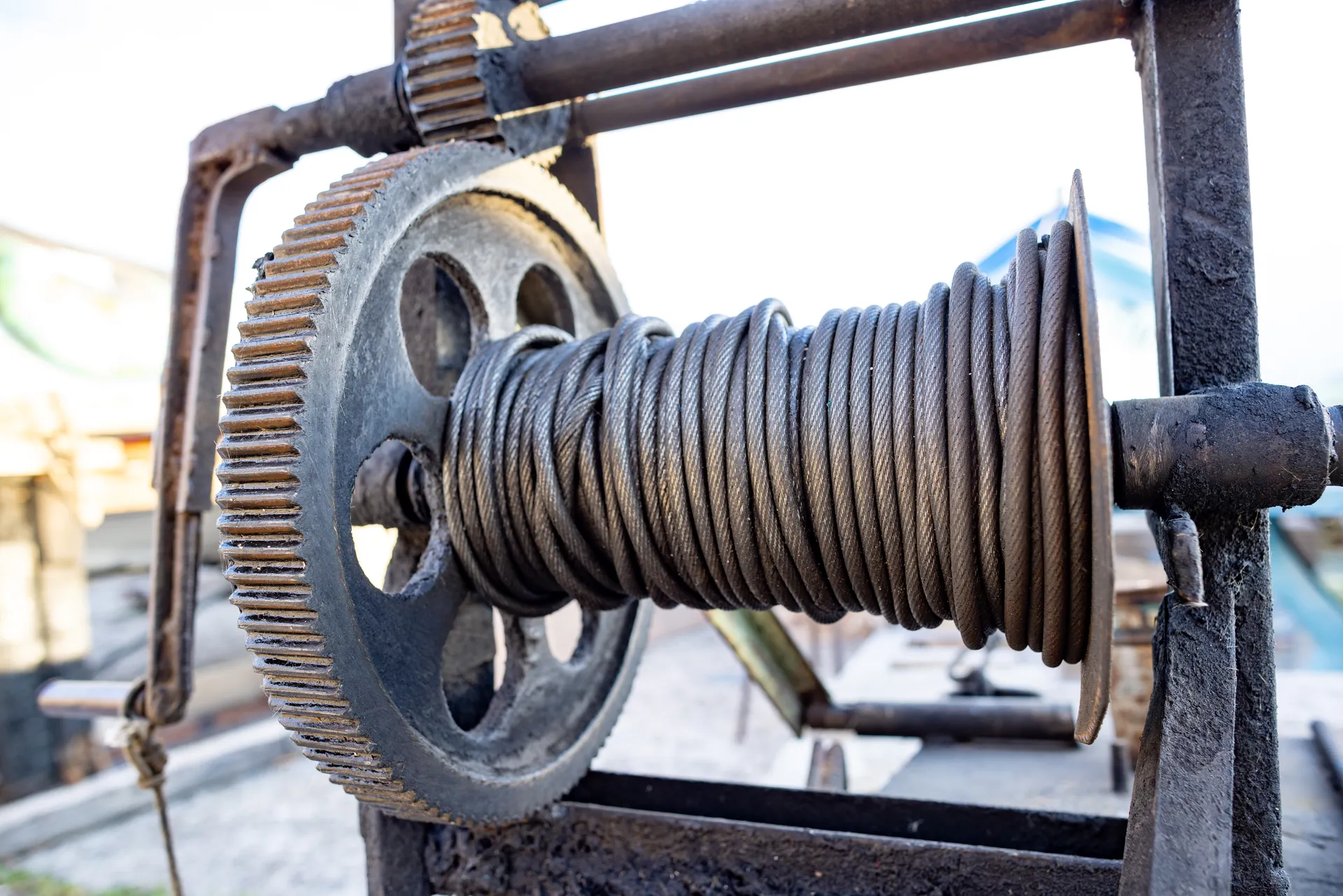 Service & RepairCable ReplacementFrayed or snapped lift cables replaced and wound evenly on both sides.
 Service & RepairRoller ReplacementQuiet sealed-bearing rollers that stop the grinding and ease the opener.
 Service & RepairPanel ReplacementDented or cracked section matched and replaced so the door seals again.