- Home
- Service & Repair
- Track Replacement
Track and Alignment
Garage Door Track Replacement in Pewaukee, WI
Garage door track guides every roller from the floor to the ceiling, so when it bends, loosens or pulls away from the wall, the whole door feels it. Pewaukee Garage Doors repairs and replaces vertical, horizontal and curved radius track for homes across Pewaukee, WI. We straighten what can be straightened, replace what can't, and reset the alignment so the door rolls quietly and stays on its rollers.
- Same-day service
- Price before we start
- Safety-tested
Track Basics
How Garage Door Track Guides Your Door
A residential sectional door rides on two track assemblies, one on each side. Each assembly has three parts. The vertical track runs up the side of the opening and fastens to the door jamb with brackets. The horizontal track runs back toward the rear of the garage and hangs from the ceiling framing on a rear hanger, often made from perforated angle iron. The curved radius section joins the two and lets the rollers turn the corner as the door moves from upright to overhead. Most homes use two-inch track, while heavier doors and some oversized doors use three-inch track.
Track is formed from galvanized steel, and its thickness, or gauge, is matched to the door's weight. A light single-layer steel door does fine on lighter track, while a heavy insulated or wood door needs heavier gauge and sturdier brackets. The rollers sit inside the curled edge of the track, which keeps them captured. Any bend in that curl, even a small one, becomes a bump the roller has to climb or a gap it can slip out of. That's why a track that looks only slightly dinged can make a door hesitate, jerk or come off its rollers entirely.
Track design also depends on the lift type. Standard-lift track is the most common, with the door turning onto the horizontal track just above the opening. High-lift track extends the vertical run well above the opening before curving, which keeps ceiling space open. Vertical-lift track runs straight up a tall wall with no horizontal section at all. Low-headroom setups use a double horizontal track so the door can turn in a tight space. Changing lift type means changing track, springs and cable drums together, so a track replacement is a good time to ask whether your garage needs have changed.
- Vertical track along the door jamb
- Curved radius track at the corner
- Horizontal track toward the rear wall
- Jamb brackets and flag angles
- Rear hangers and ceiling supports
- Two-inch and three-inch track sizes
Off-Track Doors
When the Door Comes Off Its Track
An off-track door is one of the more dangerous garage door problems, because the door is partly supported by its rollers and partly by nothing at all. It often happens when a car bumps the door, when something catches the bottom while the opener keeps pulling, when a lift cable breaks on one side, or when worn rollers and loose track finally let go. You may see the door hanging crooked, one corner higher than the other, or a section twisted out of the opening. Sometimes the opener keeps running and makes the problem worse before anyone notices.
If your door comes off track, stop using the opener, unplug it if you can do so without standing under the door, and keep people and pets away. Don't pull the emergency release while the door is partly open and crooked, because the opener may be the only thing holding it. Don't try to push it back with a broom or lever it with a pry bar. The springs and cables are still under tension, and a door that weighs well over a hundred pounds can drop or swing suddenly. Resetting an off-track door is a job for a trained technician.
When we arrive, we clamp the door so it can't move, control the spring tension as needed, and work the rollers back into the track one at a time. Then we find out why it happened. A door rarely jumps track for no reason. It may be a bent radius section, a loose jamb bracket, a broken cable, a cable that unspooled from its drum, rollers with broken stems, or opener force set too high. Putting a door back on track without fixing the cause just schedules the next failure, so we don't leave until the cause is fixed too.
Repair or Replace
Bent Track, Loose Brackets and Alignment
Not every damaged track needs to be replaced. A shallow kink in a straight run of vertical track can often be straightened with the right tools, and loose lag screws can be reset into solid wood. But track that has been creased, flattened at the curl or bent more than once loses its shape and strength, and straightening it again usually leaves a ridge the rollers can feel. Rust-through near the floor is common in Wisconsin garages where salt and slush drip off cars all winter. In those cases a new track section, matched for size, gauge and radius, is the better repair.
Brackets matter just as much as the track. The vertical track fastens to the jamb with brackets that should be lagged into solid framing, not just trim boards. The horizontal track ties into the vertical with a flag angle and is held up at the back with hangers. We often find rear hangers made from thin strap that has bent over the years, or jamb brackets pulled loose from soft, rotted wood. We replace weak hangers with sturdy angle bracing, add fasteners where they belong, and recommend jamb repair if the wood can no longer hold a lag screw securely.
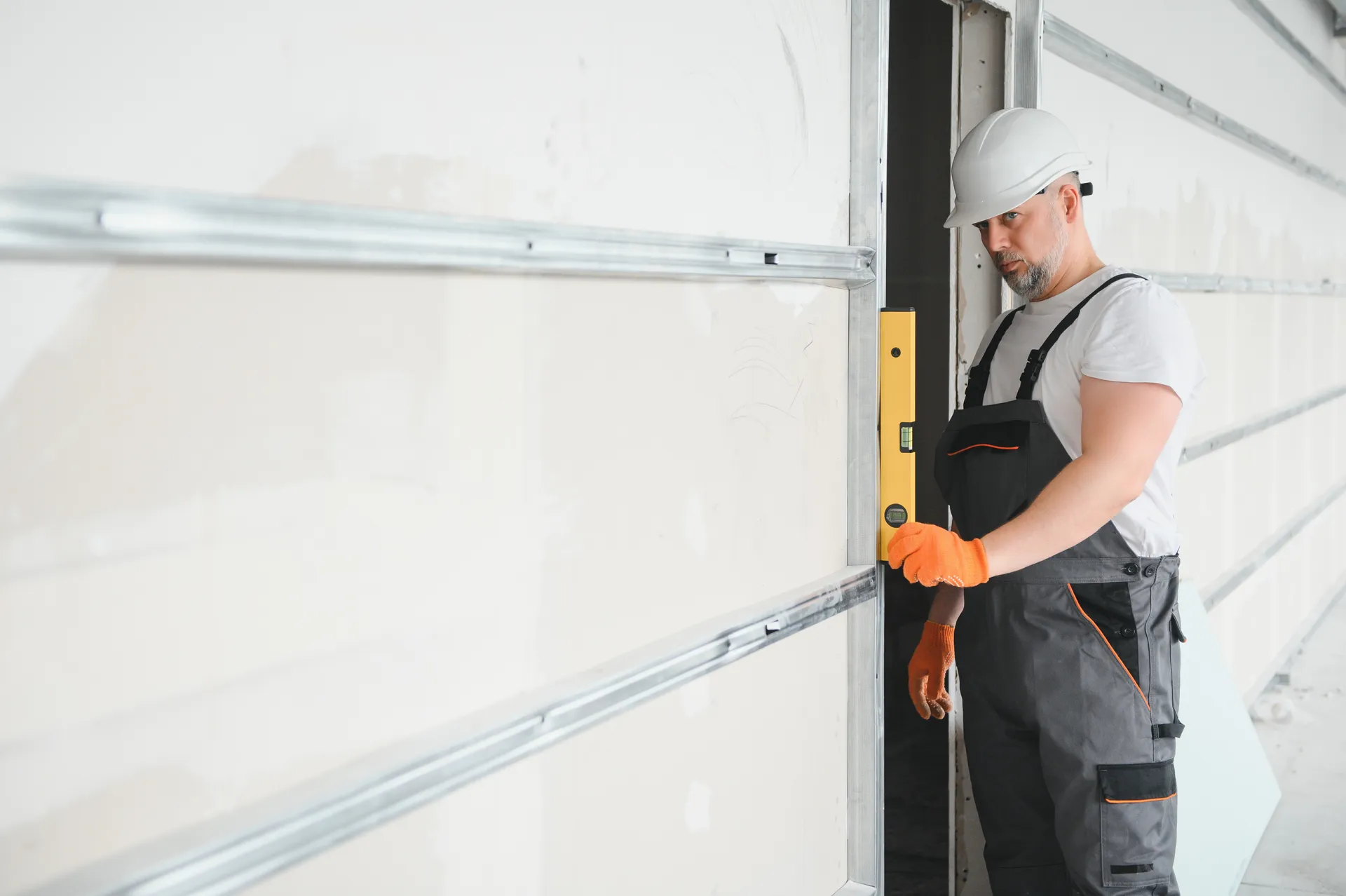
Alignment ties it all together. Vertical tracks should be plumb and set a consistent distance from the door so the rollers aren't pinched or loose. Horizontal tracks should be level side to side, usually with a slight rise toward the back so the open door stays put. Both sides need to be parallel so the door doesn't rack as it moves. We check the spacing between the door edge and the track along its full height. When those measurements are right, the door rolls freely, the opener works less, and the rollers and hinges last noticeably longer.
- Straightening minor kinks where safe
- Replacing creased or rusted sections
- Re-lagging jamb brackets into framing
- Upgrading flimsy rear hangers
- Setting tracks plumb and level
- Checking door-to-track spacing on both sides

What to look for
Signs Your Track Needs Attention
Door Hanging Crooked
If one side of the door sits higher than the other, or the bottom isn't parallel with the floor, a roller may already be out of the track, a cable may have slipped, or a bracket may have pulled loose. Stop using the door until it's checked.
Visible Bends or Dents
Look along the curl of each track. A dent, crease or flattened spot where a car, bike or snowblower hit it creates a bump the roller has to climb. The door may hesitate, jerk or clunk at the same spot every time it moves.
Grinding or Scraping Noise
Rollers should roll, not scrape. Grinding often means a roller is rubbing the track wall because the track is twisted or the spacing is off. It can also mean the rollers themselves are worn out, so we check both while we're there.
Loose or Moving Track
Watch the track while the door moves. If it shifts, flexes or rattles against the wall, the brackets or lag screws are loose. Loose track lets the rollers wander, and it's one of the most common setups for an off-track door.
Uneven Gap at the Track
When the gap between the door edge and the track is wider at the top than at the bottom, or wider on one side, the tracks aren't aligned. Rollers can pull partly out of the curl and pop free under load or after a bump.
Rust Near the Floor
Salt and snowmelt drip off cars all winter and pool at the base of the vertical track. Rust that flakes, pits or thins the steel weakens the bottom of the track and the bracket holding it to the jamb, and it gets worse every season.
Our process
How we handle track replacement
The same careful routine on every visit, so nothing gets missed.
- 1
Secure the Door
If the door is off track or hanging crooked, we clamp it in place first so it can't drop or swing. We check spring and cable condition before anything else moves, because those parts hold the door's weight under tension.
- 2
Find the Cause
We inspect track, brackets, hangers, rollers, hinges, cables, drums and opener settings. A track that bent or a door that jumped track had a reason, and we want to fix that reason, not only the symptom you can see on the day we arrive.
- 3
Repair or Replace Track
Minor kinks are straightened where it's safe. Creased, rusted or twisted sections are replaced with matching track. Brackets are re-lagged into solid framing, and weak rear hangers are replaced with stronger angle bracing that won't sag. If the jamb wood is too soft to hold fasteners, we point that out before reinstalling.
- 4
Align and Test
We set the tracks plumb, level and parallel, adjust spacing, lubricate the parts that need it, and run the door through several cycles. We finish by testing the safety sensors, auto-reverse and manual operation with the release pulled, so you know the door works safely both ways.
Changing Lift
Track Changes for Lifts, Storage and Low Ceilings
Sometimes track replacement isn't about damage at all. Homeowners who add a car lift, a tall storage system, a ceiling-hung heater or a new light fixture often find the horizontal track in the way. Converting to high-lift track raises the point where the door turns, so the open door sits closer to the ceiling and frees up space below. The conversion uses longer vertical track, a new radius and horizontal section, high-lift cable drums and, in most cases, springs recalculated for the new lift. It usually means switching to a wall-mount opener as well.
Before we suggest a lift change, we measure headroom above the door, backroom from the opening to the back wall, and side room for the spring and track hardware. We also look for obstacles like ductwork, beams, light fixtures and attic access hatches. Every lift type has minimum space needs, and some garages simply don't have enough. When the numbers work, we lay out the new track to clear the obstacle with room to spare, rather than squeezing it in so tight that the door scrapes or the rollers bind as they come around the curve.
For low-ceiling garages the reverse applies. Older detached garages and some lake cottages have very little headroom, and the door may have been fitted with improvised hardware to make it work. Low-headroom track uses a double horizontal track so the top section can turn in a tighter space, often paired with rear-mounted springs. If your garage has odd hardware that someone rigged decades ago, we'll check whether a proper low-headroom kit would make the door safer and easier to operate. Every one of these conversions involves spring work, which stays with a trained technician, never a homeowner.
What affects the price
Extent of Damage
Re-fastening a loose bracket or straightening a small kink takes less time and fewer parts than replacing a full vertical, radius or horizontal section. A door that has come off track adds time to secure and reset safely.
Track Size and Gauge
Most homes use standard two-inch track, which is easy to source. Three-inch track, heavy-gauge track for wood or oversized doors, and unusual radius sizes may need to be ordered, which affects both parts cost and timing.
Lift Type Changes
Repairing standard-lift track is a straightforward job. Converting to high-lift, vertical-lift or low-headroom track adds new drums, cables, often new springs and sometimes a different opener, so it is priced and scheduled as a larger project.
Related Repairs
A door that came off track may also have broken rollers, a frayed cable, bent hinges or a damaged section. We list every needed repair separately in the quote so you can see exactly what each part of the job costs.

Local know-how
Salt, Snowblowers and Tight Garages in Pewaukee Homes
Track problems in Pewaukee follow the seasons. Through a long winter, salty slush from I-94, Highway 16 and Capitol Drive rides home on every car and drips onto the base of the vertical track, so rust near the floor is something we see in garages all over the 53072 area. Snowblowers and lawn tractors get parked close to the door in smaller garages, and a single bump can kink a track. The 1950s to 1970s ranches and split-levels often have tight side room, and older detached garages near the lake may have low headroom with hardware improvised years ago. In the newer subdivisions around the City of Pewaukee, wide doors and three-car garages mean longer horizontal runs, and homeowners adding storage racks or car lifts often ask about high-lift conversions. Whatever your garage looks like, we measure first and set the track to fit the space you actually have.
Track Replacement FAQ
Questions about track replacement
Answers from the technicians who do this work across Pewaukee every week.
Ask a technicianCan I put my garage door back on the track myself?
We don't recommend it. An off-track door is unstable, and the springs and cables are still under tension. Prying a roller back in or pulling the emergency release at the wrong moment can let the door drop or swing. Close off the area, keep people away and call for service. We secure the door before anything else moves, then work it back into the track.
Can bent garage door track be straightened?
Sometimes. A shallow kink in a straight piece of track can often be straightened if the curl that holds the rollers isn't crushed. If the track is creased, flattened, twisted or has been bent before, straightening usually leaves a weak spot and a ridge the rollers will hit. In those cases we replace the section with new track matched to the original.
Should I lubricate my garage door track?
No, the track itself should be kept clean, not greased. Grease on the track collects dirt and can make rollers slide instead of roll. Wipe the inside of the track with a clean, dry cloth now and then. Lubricate roller bearings, hinges and springs with a garage door lubricant instead, and skip heavy grease in winter, since it stiffens badly in the cold.
Do I need to replace both tracks at once?
Not always. If only one side is damaged, we can replace that track section as long as we can match size, gauge and radius. We'll check the other side too, because a hit hard enough to bend one track often loosens brackets on the opposite side, and both tracks need to be aligned to each other when we're done so the door runs true.
Why does my door keep coming off the track?
Repeated off-track problems usually have a root cause that wasn't fixed the first time. Common culprits are loose or misaligned track, worn rollers with broken stems, a cable that slips off its drum, a bent section, or opener force set so high that it keeps pushing when something is wrong. We check all of these before resetting the door, then test it carefully.
What is high-lift track and do I need it?
High-lift track extends the vertical track above the door opening before it curves back, so the open door sits closer to the ceiling. It's useful when you want room for a car lift, tall storage or a ceiling fixture. It needs enough headroom, new drums and cables, spring changes and usually a wall-mount opener, so we measure before recommending it.

Get Your Door Rolling Straight Again
If your track is bent or loose, or the door has come off its rollers, call Pewaukee Garage Doors. We'll secure the door, find the cause and quote the repair before work starts.
More services