- Home
- Garage Doors
- Garage Door Installation
New door, done right
Garage Door Installation in Pewaukee, WI
A new garage door is one of the few home upgrades you use every single day. We install complete door systems for Pewaukee homes: we measure the opening ourselves, help you pick insulation that suits a Wisconsin winter, fit new springs, tracks and hardware, seal the edges against wind and snow, haul the old door away, and balance and safety test everything before we leave. You get a quoted price before any work starts.
- Same-day service
- Price before we start
- Safety-tested
Start with measurements
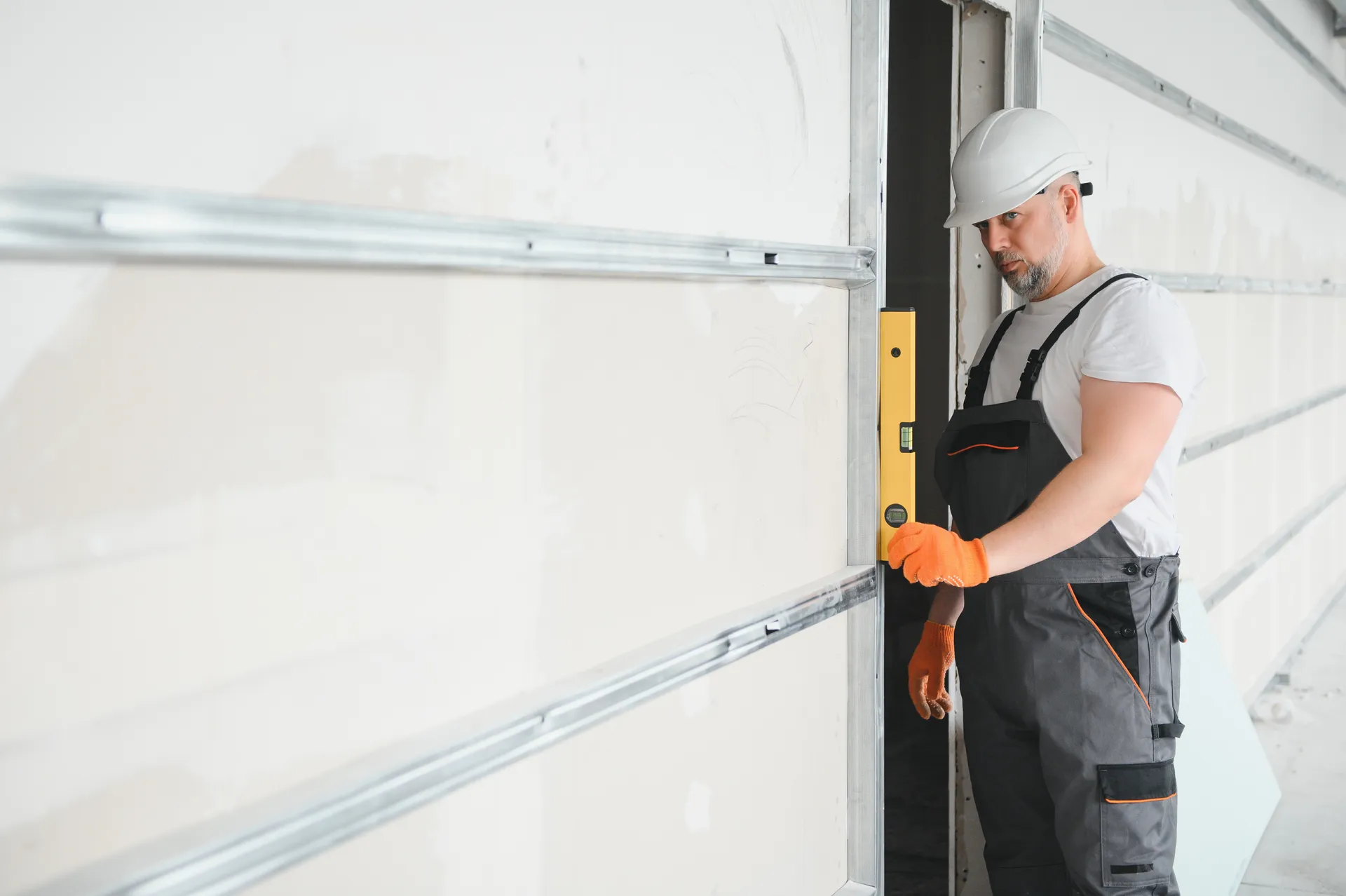
Every install begins with a tape measure
Garage door openings are rarely as square as they look. Older lake cottages, additions and even newer builds can have headers that sag a little, floors that slope toward the drive, or side jambs that lean. Before we quote a door, we measure the width and height of the opening in several places, check headroom above the opening, measure backroom from the opening to the back wall, and check the side room on each side for the tracks and springs. Those numbers decide which track setup, spring system and door size will actually work in your garage.
Headroom matters more than most homeowners expect. A standard torsion spring setup needs a certain amount of space above the door, and a low ceiling, a beam or a bonus room floor can get in the way. When space is tight, low headroom track kits or a different spring arrangement can solve it. We also note where the opener will mount, whether there is an outlet nearby, and whether ductwork, lights or storage racks will block the door's path. Finding those conflicts on paper is far easier than finding them on install day.
We also look at the condition of what surrounds the door. Rotted wood jambs, a crumbling concrete apron or a header that has shifted all affect how well a new door will seal and run. If the jambs are soft, the new door has nothing solid to hang from, so we point it out before you order. A door is only as straight as the frame it is mounted to, and a good install accounts for the opening as it really is, not as the plans say it should be.
- Width and height taken at several points
- Headroom checked for spring and track clearance
- Backroom measured for track and opener length
- Side room confirmed on both jambs
- Floor slope noted for bottom seal fit
- Jamb and header condition inspected before ordering
Insulation and R-value
Choosing insulation for a Wisconsin winter
Insulation is one of the biggest decisions on a new door, and it affects more than heating bills. Garage doors come in three basic builds: single-layer steel with no insulation, two-layer steel with polystyrene board behind the face, and three-layer doors with injected polyurethane foam sandwiched between two steel skins. Polyurethane bonds to both skins, which makes the panel stiffer, quieter and more resistant to dents, while polystyrene inserts are lighter and usually cost less. Single-layer doors still make sense for a detached shed or garage that is never heated and rarely used.
R-value is the number manufacturers use to describe how well a door resists heat flow. Higher numbers insulate better, but manufacturers do not all calculate R-value the same way, so comparing two brands by number alone can mislead you. What matters in practice is the construction of the panel, how well the sections seal against each other, and whether the perimeter seals are tight. A high R-value door with gaps at the bottom will still let cold air pour in when the wind comes off the lake, so the seals deserve as much attention as the number.
For an attached garage, especially one with a bedroom or living space above it, an insulated door helps keep the shared walls and floors warmer and can keep pipes, freezers and stored paint from getting too cold. It also keeps the garage cooler on humid summer afternoons. If you work in your garage, park a car you want to start easily on a January morning, or simply want a quieter door, insulation is usually worth it. We will explain the options so you can weigh the difference for your own garage.
Seals and hardware
New springs, tracks and seals that keep weather out
We install a new door as a complete system rather than hanging new panels on old parts. That means new tracks, new springs sized to the weight of the new door, new cables, drums, hinges, rollers and brackets. Springs are matched to a specific door weight and height, so the springs from your old door will almost never be right for a new one, and old tracks are often bent or worn in ways that make a new door bind. Fresh hardware also means everything starts its service life at the same time, instead of a new door wearing against parts that are already halfway through theirs.
Weather sealing is what makes a garage door feel solid on a windy January night. The bottom seal fills the gap between the door and the floor, and we choose a profile that suits the slope and condition of your slab. Perimeter seals along the sides and top press against the door face to block drafts, blowing snow and rain. The joints between sections can also seal against each other on insulated doors. For floors with low spots or a slab that has heaved, a threshold seal fastened to the concrete can close the gap the bottom seal alone cannot reach.
Springs, cables and drums carry the full weight of the door under high tension, and that work is for trained technicians only. Removing an old door also means releasing the tension in its springs safely, which is one of the more dangerous jobs in residential garage work. Please do not try to take down an old door yourself, cut cables or loosen spring hardware to save time before we arrive. Leave the old door as it is, closed and unplugged if you like, and we will handle the removal from start to finish.
- New torsion springs sized to door weight
- New tracks, rollers, hinges and cables
- Bottom seal matched to your floor
- Perimeter seals on sides and header
- Old spring tension released by a technician
- Hardware fastened into solid framing

What to look for
Signs it may be time for a new garage door
Panels are cracked or rusted
Rust that starts at the bottom edge from road salt and slush, cracked wood panels, or steel skins that have separated from the frame are hard to fix well. When more than one section is damaged, or the style is discontinued and panels cannot be matched, replacing the whole door often makes more sense.
The garage stays freezing cold
If your attached garage drops close to outside temperatures on winter nights, the door is likely uninsulated or poorly sealed. That cold reaches shared walls, rooms above the garage and anything stored inside. A new insulated door with good perimeter seals can noticeably change how the space feels in January.
Repairs keep coming back
A door that needs a spring, then a cable, then a roller, then a panel, within a few years is telling you something. When an older door's parts are all wearing out together, repeated service calls can add up faster than you expect. We will tell you honestly whether repair or replacement makes more sense.
The door is very noisy
Grinding, banging and shaking during every cycle often come from worn rollers, loose hardware and a heavy older door working against its springs. Some noise can be fixed with service, but an old single-layer door with tired hardware may never run quietly again. Newer insulated doors are noticeably quieter.
It looks dated from the street
The garage door can cover a large share of your home's front. If the house has new siding, windows or a new roof and the old door still looks tired, a new door is one of the most visible improvements you can make. It changes the look of the whole front of the house.
Gaps let in snow and water
Light showing around the edges, drifted snow inside the door after a storm, or puddles along the bottom are signs the door no longer seals. Warped panels or a door that does not sit square in the opening often cannot be sealed properly with new weatherstripping alone, especially on older wood doors.
Our process
How we handle garage door installation
The same careful routine on every visit, so nothing gets missed.
- 1
Measure and discuss
We visit, measure the opening, headroom, backroom and side room, and look at the framing. We talk about how you use the garage, whether it is heated, and the look you want, then recommend door builds, insulation levels and styles that fit the opening and your goals.
- 2
Quote and order
You receive a written quote that lists the door, insulation, windows, hardware, seals and removal of the old door. We quote the price before work starts. Once you approve it, the door is ordered to the exact size of your opening, and we schedule your install date when it arrives.
- 3
Remove and install
On install day, a technician safely releases the tension on the old springs, takes the old door down and loads it for haul-away. We set new tracks, stack the new sections, install springs, cables and drums, and fit the bottom and perimeter seals to your opening.
- 4
Balance and test
We balance the door, adjust the springs, connect or reinstall the opener, and test the photo eyes, auto-reverse and manual release. Before we leave, we show you how everything works, clean up the work area and answer any questions about care or maintenance.
Finish and safety
Haul-away, balancing and a full safety test
On install day we start by protecting the area, taking down the old door safely and removing it from your property. We haul away the old panels, tracks and springs, so you are not left with a pile of steel in the driveway or a trip to the transfer station. Then we check the opening again, install the new jamb seals or trim if needed, set the tracks plumb and level, and stack the sections one at a time while fastening hinges and rollers as each panel goes up. Each section is checked for level before the next one goes on.
Once the door is hung, we wind the springs and balance the door. A properly balanced door should stay roughly in place when lifted halfway by hand with the opener disconnected. If it drops or shoots up, the spring tension needs adjusting. Balance matters because the opener is meant to guide the door, not lift its full weight. A door that is out of balance wears out openers, strips gears and puts extra load on cables and bearings, so we take the time to get it right before connecting anything.
The final step is a safety test. If the door connects to an opener, we check that the photo eye sensors are aligned and that the door reverses when the beam is broken. We also test the auto-reverse by placing an object under the closing door, set the force and travel limits, and confirm the manual release works. Then we walk you through how the door operates, how to use the release cord, and the simple maintenance you can safely do yourself, like keeping the tracks clear and watching for frayed cables.
What affects the price
Door size and count
A single-car door, a double door and a three-car garage with two or more doors are very different projects. Larger and taller openings need heavier sections, bigger springs and longer tracks, and every extra door adds materials and labor to the job.
Insulation and construction
Single-layer steel, polystyrene-backed doors and polyurethane-injected doors are priced differently. Thicker steel, higher insulation levels and stronger reinforcement add cost, but they also add stiffness, quiet operation and comfort in a heated or attached garage.
Style, windows and finish
Raised panel steel in a standard color is usually the simplest option. Carriage house designs, wood-look finishes, custom colors, decorative hardware and window sections all add cost. Insulated or obscure glass costs more than plain glass inserts.
Opening and framing work
Low headroom track kits, rotted jambs that need replacing, new trim, an uneven floor or a header that needs attention all affect the final price. We point these issues out during the measuring visit so they are part of the quote rather than a surprise.

Local know-how
Installing doors that handle Pewaukee lake wind and winters
Pewaukee has a wide mix of garages, and each one asks something different of a new door. Older cottages near the lake often have narrow single openings, low ceilings and framing that has settled over the decades, so careful measuring and low headroom hardware come up often. The 1950s through 1970s ranches and split-levels around town tend to have attached garages where an insulated door makes the rooms next door more comfortable. In the newer subdivisions with three-car garages, matching two or three doors in color and style matters for curb appeal. Everywhere in town, winters bring subzero nights, heavy snow and plenty of road salt tracked in on tires, and homes near the shore of Pewaukee Lake catch steady wind and moisture. That is why we pay close attention to bottom seals, perimeter weatherstripping and the finish on the lower sections, where salt and slush do the most damage.
Garage Door Installation FAQ
Questions about garage door installation
Answers from the technicians who do this work across Pewaukee every week.
Ask a technicianHow long does a garage door installation take?
Most single or double door replacements are finished in one visit, usually within part of a day. The time depends on the size of the door, whether we are also installing an opener, and how much work the opening needs. Rotted jambs, low headroom setups or a three-car garage with multiple doors take longer. We give you a realistic time estimate when we confirm your install date, so you can plan around it.
Do you take away my old garage door?
Yes. We take down the old door, release its spring tension safely, and haul away the panels, tracks, springs and hardware. You do not need to arrange a dumpster or make a trip to drop off scrap. Please leave the old door in place and do not try to remove springs or cables yourself before we arrive, since that is one of the most dangerous parts of the job.
Can I keep my existing opener with a new door?
Often yes, if the opener is in good working condition, has working safety sensors and is rated for the weight of the new door. A heavier insulated door or a taller door may be too much for an older or smaller opener. We check the opener during the measuring visit and tell you whether it should be reused, adjusted or replaced, so you are not surprised after the door is installed.
Is an insulated door worth it if my garage is not heated?
For an attached garage, usually yes. Even an unheated attached garage shares walls, and sometimes a floor, with living space. An insulated door keeps that space warmer in winter and cooler in summer, protects stored items from extreme temperatures, and runs more quietly. For a detached shed that is rarely used, a single-layer door may be all you need. We can talk through which fits your garage.
Why do you replace the springs and tracks too?
Springs are sized to the exact weight and height of a door, so springs from an old door almost never suit a new one. Old tracks are often bent, worn or mounted for a different door thickness. Putting a new door on old hardware can cause binding, poor balance and early wear. A complete new system means the door runs as designed and all the parts start fresh together.
Do I need to be home during the installation?
We ask that someone be home at the start to confirm the door, color and window placement, and at the end so we can walk you through how everything works, including the manual release and safety sensors. In between, you do not have to stay in the garage. Please clear cars, bikes and stored items away from the door area before we arrive so we can work safely.

Ready for a new garage door?
Call us to schedule a measuring visit. We will check your opening, explain insulation and style options, and give you a clear quote before any work starts on your new garage door.
More services